Bitcoin
Bitcoin Core
Start with the first-principles self-custody curriculum. Use quick Core practice and the wallet guide for mechanics, and essays for the reasoning.

Practical path
Start with first principles
The self-custody curriculum is the main learning path. Begin with the threat model and understand why the course chooses Bitcoin Core, generic hardware and Linux. Master one disposable wallet, prove recovery, then separate signing from online coordination. Add advanced policies only if your threat model requires them.
Practical Bitcoin Self-Custody with Bitcoin Core
A first-principles self-custody course: threat model, Bitcoin Core and generic Linux hardware, one encrypted wallet and proven recovery, then offline signing and policies only as needed.
Quick Bitcoin Core Practice
A disposable hands-on Bitcoin Core exercise: verify the software, create an empty wallet and map its backup. The full curriculum starts with the threat model.
Bitcoin Core Wallet: Setup, Encryption, Backup and Recovery
A focused reference for creating, encrypting, backing up and restoring one Bitcoin Core wallet. Follow the full curriculum for the threat model and architecture.
Dedicated Debian Images for Bitcoin Core — Coming Soon
Coming soon: minimal Debian ISO images for an offline Bitcoin Core signer, Bitcoin Core Vault wallet creation and backup, and a dedicated online node.
Essays
Essays examine the evidence, history and architectural choices behind the course. They complement the curriculum; the quick exercise and wallet guide provide focused hands-on references.
10 essays

Three Hardware Wallets That Scream Bitcoin. Twenty Backups That Don't.
2-of-3 multisig vs. 2-of-20 singlesig. The economics of Bitcoin self-custody, privacy, and why we've made a simple problem so complicated.

Hardware Wallets Are an Economic Security Failure
Why Bitcoin-specific supply chains and concentrated rewards change the economics of attacking hardware wallets.
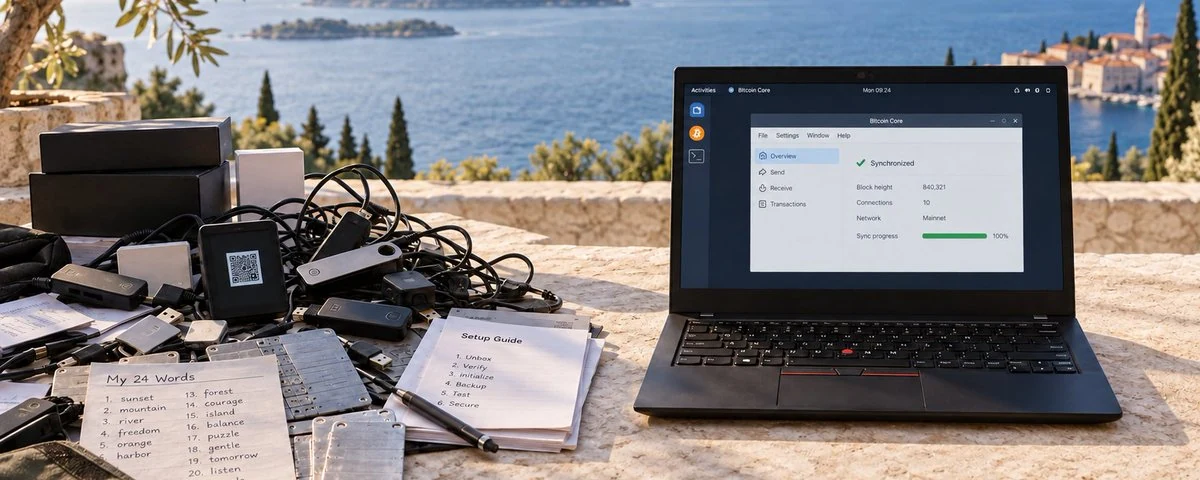
Bitcoin Self-Custody Got Weird. It’s Time to Simplify It.
How hardware wallets, BIP39 ceremonies and fragmented security stacks became the default — and why Bitcoin Core on generic hardware deserves another look.

Single-Sig and Multisig from First Principles
Start with people and spending authority. Then choose the signing policy that enforces the arrangement you actually need.
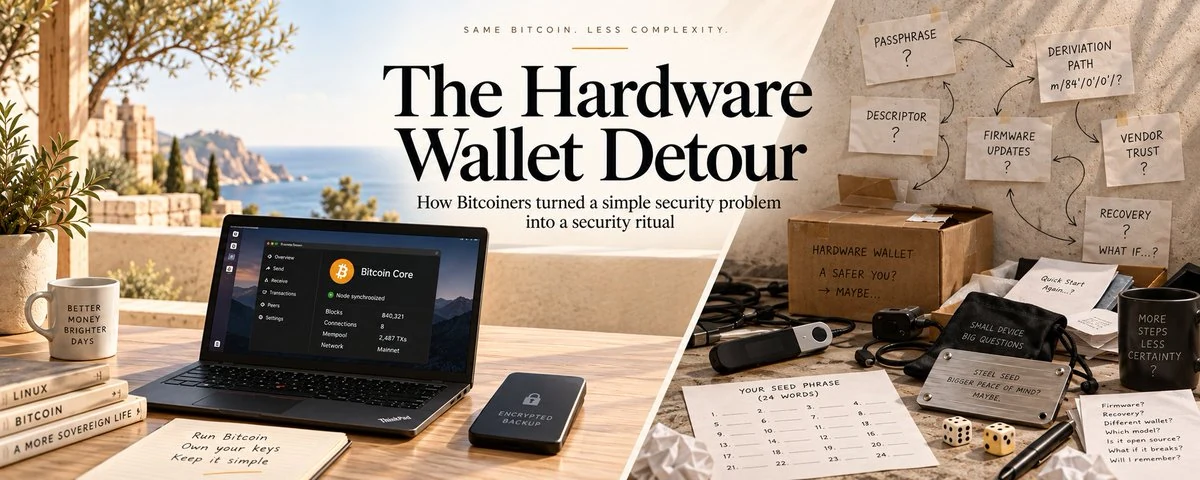
The Hardware Wallet Detour
How Bitcoiners turned a software-security problem into a culture of devices, seed rituals and vendor dependencies.

We Made Bitcoin Self-Custody Harder Than It Had to Be
Separate the encrypted wallet, its passphrase, validation and recovery — and rethink what a backup should preserve.

Multisig Is Not a Dollar Amount
Multisig is not “singlesig, but for more money.” Multisig is a different authorization model.

BIP39 Made the Wrong Thing Human-Readable
Why a machine-readable Bitcoin Core wallet backup can preserve more recovery context than a mnemonic root secret.

How Bitcoin Core Generates Entropy When You Create a New Wallet
How Bitcoin Core gathers and cryptographically mixes entropy, validates a private key, and builds a BIP32 wallet from it.

The Long Road Back to Bitcoin Core
How a hardware-wallet controversy, an entropy rabbit hole, and simple restore tests ended my search for the perfect Bitcoin wallet.